
34 Best STEM Toys for Kids (2026)
Our editors independently select these products. If you buy through our links, we may earn a commission. Learn more
The 34 best STEM toys for kids in 2026 span coding, science, engineering, math, creative STEAM, and outdoor science for ages 3 to teen. Standouts: the National Geographic Earth Science Kit ($29.99, 100+ experiments), PicassoTiles 100-piece set ($39.99), and the budget-hero Sillbird 12-in-1 solar robot ($19.99).
At a Glance
34 Best STEM Toys for Kids (2026)
The best STEM toys don't announce themselves as educational — they're the toys kids reach for anyway, with the science smuggled inside. This guide collects 34 verified picks across six categories — coding and robotics, science kits, engineering and building, math and logic games, creative STEAM, and outdoor science — covering every age from a 3-year-old's first binoculars to a teen's JavaScript-programmable robot. Every pick has a current price and a direct buy link, from $11.99 starter kits to showpiece builds.
Shopping by age instead of subject? Our gifts for kids by age hub has dedicated guides for toddlers through teens, and the kids' gifts under $20 guide covers the budget lane.
Coding & Robotics
Coding toys now start years before kids can read — the best screen-free sets teach sequencing to preschoolers, and the ladder runs all the way to robots kids program in JavaScript. Match the toy to the kid's stage, not their ambition: the Coding Critters set ($37.09) is the right first rung at 4, while the Sphero BOLT ($179.00) keeps growing into the teen years. The Sillbird 12-in-1 solar robot ($19.99) is the budget hero — a genuine build-and-rebuild kit for under $20.

Learning Resources Coding Critters Ranger & Zip (22-Piece Set)
The consensus first coding toy: preschoolers learn sequencing by steering a puppy through storybook challenges — no tablet, no reading required.

What We Love
- 100% screen-free intro to coding logic
- Storybook-based coding adventures preschoolers actually follow
- Doubles as an interactive pet toy after the lesson
Worth Noting
- Coding concepts are very basic — kids outgrow it by ~7
- Needs AAA batteries

Sphero indi At-Home Learning Kit
indi reads colored tiles on the floor as commands, so a 4-year-old builds and debugs real mazes before they can read — the cleverest screenless coding system we found.
What We Love
- Kids program by laying color tiles — no screen or reading needed
- Teaches real computational thinking through maze-building
- Grows into app-based block coding later
Worth Noting
- Pricier than other preschool coding toys
- Small color tiles to keep track of

Osmo Coding Starter Kit for iPad (3 Games)
Osmo's camera reads physical command blocks kids snap together, turning the iPad into a coding playground — the best bridge between tangible play and real programming logic.
What We Love
- Physical coding blocks control on-screen games — hands-on, not passive screen time
- 3 games scale from sequencing to music coding
- Huge replay value across ages 5–10
Worth Noting
- Requires a compatible iPad or Fire tablet
- Base + blocks have lots of pieces to corral

Wonder Workshop Dash Robot
Reviewers' top pick for 6–8-year-olds: Dash responds to voice commands and obstacle sensors out of the box, then grows into genuine block programming.
What We Love
- Voice-activated, fully assembled robot kids can program in minutes
- Three free apps scale from drag-and-drop paths to Blockly code
- Used in 20,000+ schools — proven curriculum behind it
Worth Noting
- Premium price
- Accessories (launcher, xylophone) sold separately

Sphero BOLT Coding Robot Ball
The rare STEM toy with a real ceiling: BOLT starts with drag-and-drop and ends with JavaScript, making it our pick for the 8-to-teen stretch.
What We Love
- Programs in draw, block code, AND JavaScript — grows from 8 to high school
- Programmable 8x8 LED matrix plus compass, gyro and light sensors
- Durable waterproof shell survives crashes
Worth Noting
- Needs a phone/tablet to program
- Open-ended — kids who want missions may need prompts

Sillbird 12-in-1 Solar Robot Building Kit (190 Pieces)
The best-selling budget robotics kit on Amazon: one box of 190 pieces becomes a dozen sun-powered robots, cars and animals — engineering plus renewable energy for $20.
What We Love
- Builds 12 different solar-powered robots from one kit
- Teaches solar energy + mechanical engineering for under $25
- 15,000+ ratings — a proven crowd-pleaser
Worth Noting
- Needs direct sunlight to run well
- Small parts and fiddly assembly frustrate younger kids
Science Kits & Experiments
A great science kit makes the kid the scientist, not the spectator. This lineup runs from first-experiments sets for preschoolers to a real 1200X microscope, with the National Geographic Earth Science Kit ($29.99) as the do-everything centerpiece — 100+ experiments for the price of a board game. For the kid who's already burned through starter kits, MEL Science ($29.90/month) delivers a new lab in the mail every month.

Doctor Jupiter My First Science Kit (50+ Experiments)
The best on-ramp to 'real' science for preschool and early elementary — bubbling, color-changing, fizzing experiments with picture cards a 4-year-old can follow.
What We Love
- 50+ experiments sized for ages 4–8 attention spans
- Almost everything included — minimal pantry scavenging
- Clear picture-based instruction cards pre-readers can follow
Worth Noting
- Some experiments are one-and-done
- Adult supervision needed throughout

Educational Insights GeoSafari Jr. Talking Microscope (feat. Bindi Irwin)
A real-feeling first microscope that talks: 11,000+ parents rate it the gateway science tool for kids too young for glass slides.
What We Love
- Bindi Irwin narrates facts about 60 slide images — no reading required
- Dual eyepieces, so no squinting through one eye
- Fact and quiz modes keep it fresh
Worth Noting
- Fixed slides only — can't view your own specimens
- Voice volume can't be lowered much

Thames & Kosmos Ooze Labs Chemistry Station (20 Experiments)
Thames & Kosmos turns the chemistry set into a lab playset — kids get real reactions and real lab technique without anything hazardous.
What We Love
- 20 non-hazardous experiments: safe slime, chromatography, color-changing reactions
- Working lab station playset with centrifuge and storage
- From the most trusted name in kids' science kits
Worth Noting
- Consumables run out — refills are DIY
- Messy (that's the fun, but still)

National Geographic Earth Science Kit (100+ Experiments)
The best value in the whole science aisle: a crystal-growing lab, erupting volcano, and real mineral collection in one $30 box.
What We Love
- 100+ experiments for $30 — crystal growing, volcano, rocks and minerals
- Includes a genuine rock and mineral collection
- 20,000+ ratings at 4.7 stars
Worth Noting
- Volcano and crystals need multi-day patience
- Instructions skew dense for younger kids

AmScope 120X-1200X 52-Piece Beginner Microscope STEM Kit
When a kid is ready to graduate from picture slides to pond water, this metal-bodied AmScope is the proven step up — a real instrument at a toy price.
What We Love
- Real metal-body microscope up to 1200x — not a toy
- 52-piece kit with prepared and blank slides, tools, and carrying box
- 36,000+ ratings; the default first 'serious' microscope
Worth Noting
- Top magnifications are dim and finicky
- Plastic slides feel cheap next to the metal scope

MEL Science Subscription (Chemistry, Physics, Math & STEM tracks)
For the kid who burns through one-off kits: MEL delivers a new lab-grade experiment box every month, with the chemistry track sophisticated enough for teens.
What We Love
- Monthly hands-on kits with VR/AR lessons — real lab-grade chemistry at home
- Four tracks: STEM (5+), Math (8+), Physics (8+), Chemistry (10+)
- Pause or cancel anytime; the gift that restocks itself
Worth Noting
- Subscription cost adds up over a year
- Chemistry track needs adult setup
Engineering & Building
Building toys are the most-gifted STEM category for a reason: open-ended construction is the play pattern that lasts years, not weeks. PicassoTiles ($39.99) own the preschool end, GraviTrax ($55.39) turns marble runs into physics experiments, and the LEGO Technic Mars Rover ($93.42) is the showpiece build for space kids — a faithful replica of the real Perseverance.

PicassoTiles 100-Piece Magnetic Building Tiles Set
The value king of magnetic tiles: 100 pieces of open-ended geometry play that works from age 3 through elementary engineering experiments.
What We Love
- 100 translucent tiles for half the price of premium brands
- Teaches 2D-to-3D geometry through open-ended building
- 40,000 ratings at 4.8 — one of the best-reviewed STEM toys, period
Worth Noting
- Magnets are weaker than Magna-Tiles/Connetix
- Tall builds collapse easily (a physics lesson in itself)

Educational Insights Design & Drill Bolt Buddies Fire Truck
Engineering for the pre-K set: kids drill the fire truck together and take it apart again, building the assembly instinct every later STEM kit relies on.
What We Love
- Real working toy power drill builds fine-motor skills
- Take-apart fire truck with rescue figures keeps it story-driven
- First 'tools' experience without real-tool risk
Worth Noting
- Drill chews through batteries
- Bolts are easy to lose under the couch

K'NEX Adventure Wheels Building Set (480 Pieces)
Rod-and-connector building fills the engineering gap bricks can't — kids learn trusses, axles and load paths while building cars that actually roll.
What We Love
- 480 rods and connectors build vehicles with working wheels
- Teaches structural engineering differently than brick systems
- Strong price-per-piece value
Worth Noting
- Instructions take patience for younger builders
- Connector pieces can be stiff for small hands

Ravensburger GraviTrax Starter Set
The thinking kid's marble run: GraviTrax makes velocity and momentum tangible, and the expansion ecosystem keeps it alive for years.
What We Love
- Kids engineer gravity, magnetism and kinetic energy into working tracks
- MESH-accredited STEM system with endless expansion sets
- Deeply replayable — every build is a new physics problem
Worth Noting
- Starter set feels small once kids get ambitious (expansions beckon)
- Setup needs a flat surface and patience

Thames & Kosmos Mega Cyborg Hand STEM Kit
The single coolest build in the engineering aisle: a giant water-powered cyborg hand kids wear, that grips via the same hydraulics as real excavators.
What We Love
- Build a giant wearable hydraulic hand that actually grips
- Teaches pneumatic/hydraulic systems with zero electronics
- Toy of the Year award finalist; a guaranteed wow
Worth Noting
- Multi-hour assembly — better with a parent first time
- Sized for bigger kid hands

LEGO Technic NASA Mars Rover Perseverance (42158)
The best space-science build LEGO makes: kids assemble the actual suspension geometry NASA used, then explore the mission in AR.
What We Love
- Faithful Perseverance replica with working suspension and 360° steering
- AR app experience walks kids through real rover missions
- Genuine mechanical engineering — differentials, linkages, pivots
Worth Noting
- 1,132 pieces — a multi-session build
- Display-leaning once finished
Math & Logic Games
The trick to math gifts: they have to be games first and math second. Every pick here passes the "would they play it if you didn't call it educational" test — from MathLink Cubes ($12.59) for hands-on counters to Prime Climb's genuinely beautiful multiplication board. Rush Hour ($21.99) remains the classic gateway logic puzzle.

Learning Resources MathLink Cubes, Set of 100
What kindergarten teachers actually use: snapping cubes together turns abstract numbers into something kids can hold, stack and compare.
What We Love
- The classroom-standard math manipulative, at home for $13
- Makes counting, place value and patterns physical
- Doubles as a building toy for younger siblings
Worth Noting
- Just cubes — parents supply the activities
- Cubes click stiffly for small hands at first

ThinkFun Rush Hour Traffic Jam Logic Game
The definitive sliding-block logic puzzle: kids reason through traffic-jam challenges that ramp from easy to genuinely hard, building planning and sequencing skills one card at a time.
What We Love
- 40 leveled challenges from beginner to expert build sequential-logic skills
- Single-player — no screen, no batteries, travels well
- The classic gateway logic game — still the one teachers recommend
Worth Noting
- Small vehicle pieces are easy to lose
- Experienced puzzlers may outgrow the included challenge deck

ThinkFun Gravity Maze Falling Marble Logic Game
The definitive logic toy of the last decade: kids place towers so a marble can fall from start to target — trial, error, and triumphant 'YES!' included.
What We Love
- 60 challenges combine marble-run fun with real spatial planning
- Single-player logic — perfect quiet-time brain work
- 37,000+ ratings; a perennial STEM award winner
Worth Noting
- Beginner cards go fast for puzzle-inclined kids
- Towers knock over easily mid-setup

Proof! Fast-Paced Mental Math Card Game
The math game kids request on family game night: spotting hidden equations under time pressure builds the mental-math muscle no worksheet can.
What We Love
- Whole-family speed math — first to spot an equation wins the cards
- Teacher's Choice Award winner; sneaks in real arithmetic fluency
- 2-minute teach, 15-minute games
Worth Noting
- Mixed-age play needs handicapping (adults dominate)
- Pure math — kids allergic to arithmetic need warming up

Math for Love Prime Climb
The most beautiful math idea in board-game form: the number coloring makes multiplication and primes visual, and the race to 101 is legitimately fun.
What We Love
- The color-coded board secretly teaches prime factorization
- Genuinely strategic — adults play it without 'letting kids win'
- Designed by math educators; beloved by math teachers
Worth Noting
- Needs multiplication basics first (best 10+)
- Analysis-paralysis kids can slow turns
Creative STEAM
The A in STEAM is where reluctant scientists sneak in: art projects with chemistry inside, music made from bananas, video games kids build themselves. The Crayola Liquid Science Kit ($11.99) is the budget entry, and a KiwiCo Tinker Crate subscription keeps the projects coming monthly.

Crayola Liquid Science Kit for Kids
Crayola's take on the science kit leads with color: density rainbows and liquid effects that hook art-first kids into asking why it works.
What We Love
- Color-driven water experiments — science through an art lens
- Under $12 stocking-stuffer price
- Trusted Crayola washability when it spills (it will)
Worth Noting
- A handful of experiments, not a deep kit
- Some materials are household-supplied

Klutz LEGO Chain Reactions: Design & Build Amazing Moving Machines
Turns the LEGO bin into a physics lab: kids chain levers, ramps and pulleys into contraptions, learning cause-and-effect engineering the fun way.
What We Love
- 10 Rube Goldberg-style machines using bricks kids already own
- 78-page engineering book explains why each machine works
- 23,000+ ratings — a proven gift
Worth Noting
- Requires your own basic LEGO bricks for some builds
- Paper ramps/parts wear out with heavy use

Makey Makey STEM Invention Kit (Joylabz)
The most imagination-dense $52 in STEM: a circuit board that makes anything conductive into a controller — banana pianos are just the opening act.
What We Love
- Turn bananas, Play-Doh or stair rails into computer keys
- Bridges circuits + coding + art — pure creative STEAM
- Classroom staple with thousands of free project ideas online
Worth Noting
- Needs a computer to plug into
- Kids need an idea spark to get started — pair it with project lists
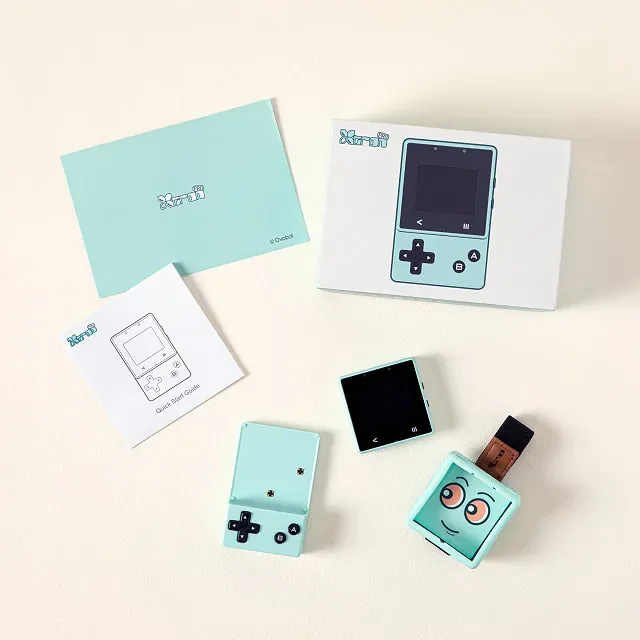
Create Your Own Video Game Set (Xtron Pro Handheld Kit)
The unique pick of the guide: instead of playing games, kids build the console and design the 8-bit games themselves — game design as a STEM discipline.
What We Love
- Kids assemble a real handheld console, then code 8-bit games for it
- Visual game editor — no prior programming needed
- Ends with a working console they made themselves
Worth Noting
- Splurge price for a niche kit
- Game editor has a learning curve beyond the first templates

KiwiCo Tinker Crate Subscription
The gold-standard STEM subscription: each Tinker Crate is a self-contained engineering build with the design thinking explained, not just assembled.
What We Love
- A complete engineering project lands in the mailbox every month
- Everything included — trebuchets, hydraulic claws, walking robots
- Sibling lines (Kiwi 5–8, Koala 3–4, Eureka/Maker for teens) cover every age
Worth Noting
- Subscription pricing adds up vs one-off kits
- Project difficulty varies month to month
Outdoor & Nature Science
STEM doesn't have to happen at a desk — this section covers the absorbed "creative and outdoor" lane: binoculars, butterflies, geodes, sun prints, and a first telescope. The Butterfly Garden kit ($27.99) is the most-loved live-science gift in America for good reason, and Kidnoculars ($12.79) get a 3-year-old into the field for under $13.

Educational Insights GeoSafari Jr. Kidnoculars
The proven gateway to outdoor science: 24,000 parents agree these are the binoculars a 3-year-old can actually use, kicking off bird and bug observation early.
What We Love
- Goggle-style eyepieces — no aligning two lenses to little eyes
- Focus-free 2x magnification, genuinely drop-proof
- Turns any walk into a backyard-science expedition
Worth Noting
- Only 2x magnification — it's a starter tool
- Older kids (6+) will want real binoculars

Insect Lore Raise & Release Butterfly Garden Kit (with Caterpillar Voucher)
No kit teaches life science like actually living it: kids feed real caterpillars, watch the chrysalis, and release painted lady butterflies they raised.
What We Love
- Kids watch real caterpillars become butterflies in ~3 weeks
- Voucher format — redeem caterpillars when the season is right
- The release day is a core childhood memory
Worth Noting
- Caterpillar shipping costs extra with the voucher
- One metamorphosis cycle per kit (refills available)

National Geographic Break Open 10 Premium Geodes
Hammer + real geode = the most reliably thrilling 10 minutes in kid science. Driveway geology that ends with crystals on the shelf.
What We Love
- Smash open 10 real geodes to reveal crystal interiors
- Goggles and display stands included
- 32,000+ ratings; the definitive rock-hound starter
Worth Noting
- You supply the hammer and the outdoor surface
- Crystal quality varies geode to geode (that's geology)
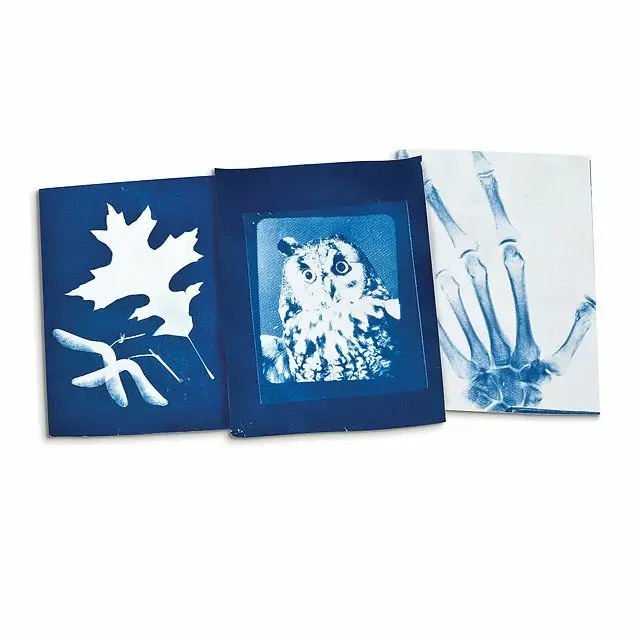
Solar Photography Kit (Cyanotype Sun Prints)
The 1842 chemistry of cyanotypes, reborn as backyard play: kids arrange leaves on treated paper and the sun does the developing.
What We Love
- Sunlight develops rich blue cyanotype prints of leaves and objects
- Chemistry + photography + art in one $15 kit
- Works on paper or fabric
Worth Noting
- Needs a sunny day
- Prints are one-shot — no do-overs on a botched exposure
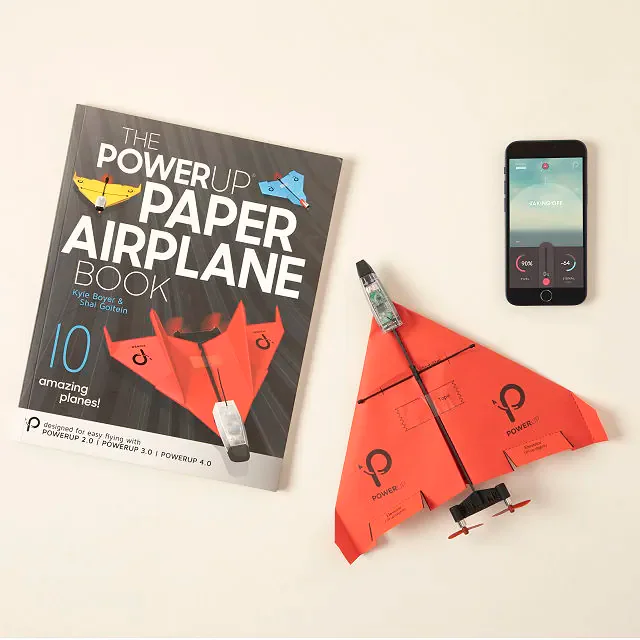
PowerUp Smartphone-Controlled Paper Airplane Kit
The teen-friendly outdoor pick: a Bluetooth propulsion rig turns any paper airplane into a pilotable aircraft — aerodynamics you can feel in your thumbs.
What We Love
- Fold a paper plane, clip on the module, pilot it from a phone
- Real aerodynamics lessons — thrust, trim, rudder — in the park
- Entry option is pocket-money cheap
Worth Noting
- UG rates the powered version 14+ — best for big kids/teens
- Crashes are part of the curriculum (planes are paper, after all)

Celestron Travel Scope 70 Portable Refractor Telescope
The classic first telescope: real optics at a double-digit price that turn a clear night into the best science lesson a kid can get.
What We Love
- Real fully-coated 70mm glass optics — moon craters and Jupiter's moons
- Comes with tripod and backpack for campsite astronomy
- From the most trusted name in consumer telescopes
Worth Noting
- Flimsy tripod is the known weak point
- Expect bright-object astronomy, not deep-sky views
Top Pick Per Category at a Glance
| Pick | Award | Category | Price |
|---|---|---|---|
| Learning Resources Coding Critters Ranger & Zip (22-Piece Set) | Screen-Free Coding | Coding & Robotics | $37.09 |
| Doctor Jupiter My First Science Kit (50+ Experiments) | First Science Kit | Science Kits & Experiments | $32.99 |
| PicassoTiles 100-Piece Magnetic Building Tiles Set | Magnetic Tiles | Engineering & Building | $39.99 |
| Learning Resources MathLink Cubes, Set of 100 | Math Manipulatives | Math & Logic Games | $12.59 |
| Crayola Liquid Science Kit for Kids | Budget Creative Science | Creative STEAM | $11.99 |
| Educational Insights GeoSafari Jr. Kidnoculars | Nature Explorer | Outdoor & Nature Science | $12.79 |
How to Choose a STEM Toy by Age
Ages 3–5: Skip anything with an app. Sequencing toys (Coding Critters), magnetic tiles, counting cubes, and field tools (Kidnoculars, the Butterfly Garden) build the pre-STEM skills — patterns, spatial reasoning, observation — that the later kits assume.
Ages 5–8: This is the kit stage: first chemistry (Ooze Labs), first real builds (K'NEX), first screen-coding with training wheels (Osmo, Dash). Pick one subject the kid already gravitates to rather than hedging with a do-everything set.
Ages 8–12: The golden years — kids can handle real experiments, multi-hour builds, and genuine programming. GraviTrax, the Mars Rover, Makey Makey, and the AmScope microscope all reward the deeper attention span.
Teens: Go real or go subscription. MEL Science ships actual lab gear; the Sphero BOLT graduates from block-coding to JavaScript; the PowerUp kit turns paper airplanes into smartphone-controlled aircraft.
Not sure which subject will stick? Ask Genie, our AI gift finder — describe the kid and get personalized STEM suggestions in seconds.
How We Chose These Toys
Every product was verified at its retailer — current price, stock, and a direct link — and the set is deliberately balanced: six categories, 27 brands, ages 3 through teen, with nine picks under $25 and six over $60 for milestone gifts. We anchored on mass-loved bestsellers (eight picks have over 20,000 ratings) and added subscriptions and boutique finds where they genuinely beat the toy-aisle option. None of these repeat our age-specific kids' guides.
Save the Ones They'd Love
Add any pick — or any STEM kit from any store — to a free GiftList with the browser extension. Share the list with grandparents before birthdays and holidays, and the right kit shows up instead of the third duplicate science set.
Know a Future Engineer? Start Their Wish List
Make a free wish list that works with any store — add STEM kits from Amazon, KiwiCo, or anywhere else, share it with family, and skip the duplicate gifts.
Create a Free Wish ListNeed a more personalized gift idea?
Tell Genie who you're shopping for and get tailored recommendations in seconds.
Free to use — no account required.
Frequently Asked Questions
What is the best STEM toy for kids?
The best all-around STEM toy depends on age: PicassoTiles magnetic tiles ($39.99) for preschoolers, the National Geographic Earth Science Kit ($29.99, 100+ experiments) for ages 8–12, and the Sphero BOLT coding robot ($179.00) for big kids and teens. This guide covers 34 verified picks across six STEM categories.
What are good STEM toys for 4-5 year olds?
Preschool STEM works best screen-free and hands-on: Coding Critters Ranger & Zip ($37.09) teaches sequencing without a tablet, PicassoTiles ($39.99) build spatial reasoning, MathLink Cubes ($12.59) make counting physical, and GeoSafari Jr. Kidnoculars ($12.79) turn the backyard into a field station.
What are the best STEM toys for ages 8-12?
Ages 8–12 is the STEM sweet spot: the GraviTrax marble-physics system ($55.39), the LEGO Technic NASA Mars Rover Perseverance ($93.42), the National Geographic Earth Science Kit ($29.99), Gravity Maze, and Makey Makey — which turns any conductive object into a keyboard — all hit the build-and-experiment stage hard.
Are STEM toys actually educational?
The good ones are — research on play-based learning favors open-ended toys that let kids build, test, and iterate over toys that perform for them. That is why this list leans on construction systems (PicassoTiles, GraviTrax), real experiments (Earth Science Kit, Ooze Labs), and games that hide math inside play (Prime Climb, Rush Hour) rather than flashing-light "smart" toys.
What is a good STEM gift under $25?
Six picks here land under $25: the Crayola Liquid Science Kit ($11.99), MathLink Cubes ($12.59), Kidnoculars ($12.79), the Sillbird 12-in-1 solar robot ($19.99) — a full build-it-yourself robotics kit — Rush Hour ($21.99), and the cyanotype Solar Photography Kit.
What is the best STEM subscription box for kids?
KiwiCo Tinker Crate ($30.00/month, ages 9–14) is the best general engineering subscription — a complete hands-on project in every box. For older kids who want real chemistry and physics, MEL Science ($29.90/month) ships proper lab equipment and experiments matched to ages 10–16+.


